

England Nhs
Add a review FollowOverview
-
Founded Date July 25, 1954
-
Posted Jobs 0
-
Viewed 704
Company Description
NHS: A Universal Embrace
Among the organized chaos of medical professionals in Birmingham, a young man named James Stokes navigates his daily responsibilities with subtle confidence. His smart shoes move with deliberate precision as he greets colleagues—some by name, others with the familiar currency of a “how are you.”
James carries his identification not merely as a security requirement but as a symbol of acceptance. It hangs against a well-maintained uniform that gives no indication of the challenging road that preceded his arrival.
What sets apart James from many of his colleagues is not obvious to the casual observer. His bearing reveals nothing of the fact that he was among the first beneficiaries of the NHS Universal Family Programme—an initiative crafted intentionally for young people who have experienced life in local authority care.
“It felt like the NHS was putting its arm around me,” James reflects, his voice steady but revealing subtle passion. His statement encapsulates the essence of a programme that aims to transform how the massive healthcare system views care leavers—those often overlooked young people aged 16-25 who have graduated out of the care system.
The figures reveal a challenging reality. Care leavers frequently encounter poorer mental health outcomes, economic uncertainty, shelter insecurities, and reduced scholarly attainment compared to their peers. Underlying these clinical numbers are personal narratives of young people who have traversed a system that, despite best intentions, often falls short in providing the supportive foundation that molds most young lives.
The NHS Universal Family Programme, launched in January 2023 following NHS England’s pledge to the Care Leaver Covenant, embodies a profound shift in institutional thinking. At its heart, it accepts that the entire state and civil society should function as a “collective parent” for those who haven’t known the stability of a traditional family setting.
Ten pioneering healthcare collectives across England have blazed the trail, establishing frameworks that reconceptualize how the NHS—one of Europe’s largest employers—can extend opportunities to care leavers.
The Programme is detailed in its methodology, beginning with detailed evaluations of existing practices, creating oversight mechanisms, and garnering executive backing. It recognizes that effective inclusion requires more than lofty goals—it demands practical measures.
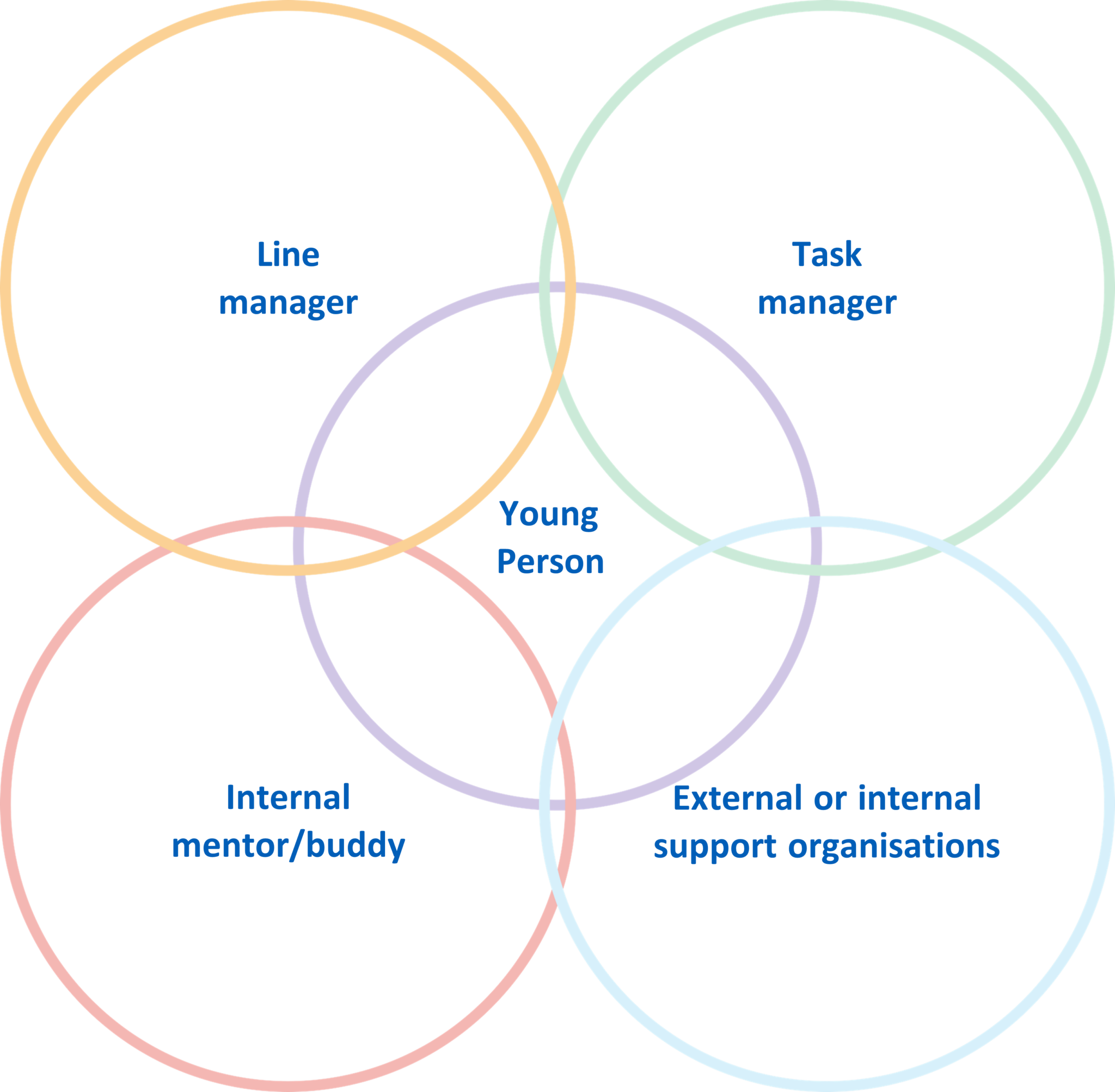
In NHS Birmingham and Solihull ICB, where James started his career, they’ve established a regular internal communication network with representatives who can offer support, advice, and guidance on personal welfare, HR matters, recruitment, and inclusivity efforts.
The standard NHS recruitment process—rigid and potentially intimidating—has been carefully modified. Job advertisements now focus on attitudinal traits rather than extensive qualifications. Applications have been reconsidered to accommodate the particular difficulties care leavers might experience—from missing employment history to struggling with internet access.
Possibly most crucially, the Programme recognizes that starting a job can create specific difficulties for care leavers who may be handling self-sufficiency without the support of parental assistance. Issues like commuting fees, personal documentation, and bank accounts—taken for granted by many—can become significant barriers.
The beauty of the Programme lies in its attention to detail—from clarifying salary details to helping with commuting costs until that critical first payday. Even ostensibly trivial elements like coffee breaks and office etiquette are carefully explained.
For James, whose career trajectory has “changed” his life, the Programme offered more than employment. It offered him a perception of inclusion—that intangible quality that emerges when someone senses worth not despite their history but because their distinct perspective enhances the institution.
“Working for the NHS isn’t just about doctors and nurses,” James notes, his eyes reflecting the subtle satisfaction of someone who has discovered belonging. “It’s about a family of different jobs and roles, a family of people who really connect.”

The NHS Universal Family Programme exemplifies more than an job scheme. It exists as a strong assertion that organizations can adapt to welcome those who have navigated different paths. In doing so, they not only alter individual futures but enhance their operations through the unique perspectives that care leavers contribute.
As James navigates his workplace, his participation subtly proves that with the right help, care leavers can thrive in environments once thought inaccessible. The arm that the NHS has offered through this Programme represents not charity but recognition of hidden abilities and the fundamental reality that all people merit a support system that supports their growth.